
Find Products
Here are the five core materials (ingredients) essential for achieving concrete strength, durability, and efficiency. These work together chemically and physically to produce high-quality concrete.
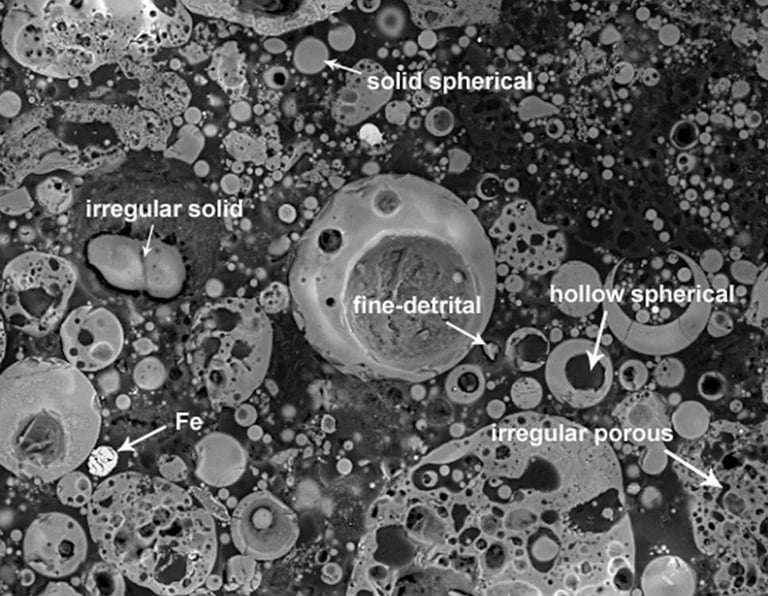
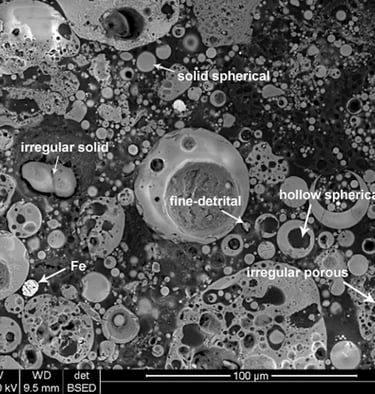
Fly Ash
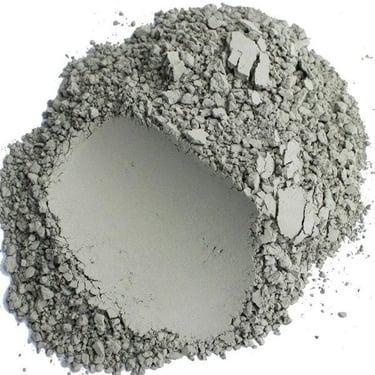
Fly ash is a fine mineral powder recovered from coal combustion and used as a supplementary cementitious Material. In concrete, it helps improve workability, reduce bleeding, and provide denser matrix performance over time. Learn more in our What is
Primarily silica, alumina, and iron rich material
Supports smoother finishes and sharper architectural detailing
Used in RMC, cement blending, blocks, and paver applications
Fly ash is a fine, powdery residue produced during the combustion of pulverized coal in
electric power plants. It is Arzaan a siliceous or luminosities material that, in finely
divided form and in the presence of moisture, chemically reacts with calcium hydroxide
(from cement hydration) to form compounds with cementitious properties. This makes it
a valuable supplementary cementitious material (SCM) in concrete production.
Key Chemical Properties of Fly Ash
The chemical behavior of fly ash determines its performance in applications like concrete.
The composition depends heavily on the type of coal burned.
1. Major Chemical Oxides (Typically >90% of composition)
Silica (SiO₂): 35–60% – The primary acidic oxide. Reacts with calcium hydroxide (lime) to form calcium silicate hydrate (C-S-H), the main strength-giving compound in concrete.
Alumina (Al₂O₃): 20–35% – Contributes to the formation of calcium aluminate hydrates, which help with early strength and durability. Can also react with sulfates.
Iron Oxide (Fe₂O₃): 5–15% – Influences the color (brownish/tan). Provides some pozzolanic reactivity and contributes to the specific gravity. In high amounts, it can make the ash denser.
Calcium Oxide (CaO): 1–30%+ – Critical differentiator: Low CaO (<10%, typical Class F) means low self-cementing properties. High CaO (>18%, typical Class C) gives the ash both pozzolanic and self-cementing (hydraulic) behavior.
2. Minor and Trace Components
Magnesium Oxide (MgO): 1–5% – Generally harmless but can affect soundness at very high levels.
Sulfur Trioxide (SO₃): 0.1–4% – Comes from coal’s pyrite or gypsum added during grinding. High SO₃ (>5%) risks undesirable expansion (sulfate attack) in concrete.
Alkalis (Na₂O & K₂O): 0.5–4% – Can react with certain reactive aggregates, causing alkali-silica reaction (ASR)—a destructive expansion. Often expressed as "total alkali equivalent."
Loss on Ignition (LOI): 0.5–6% – Unburned carbon residue. High LOI increases water demand and can adsorb air-entraining admixtures, harming freeze-thaw durability. Quality fly ash requires low LOI.
Trace Elements: As, Pb, Se, Cr, Hg – Present in very small ppm amounts. A concern for environmental leaching if not properly used or stored.
Chemical Composition (ASTM C618)
3. Key Chemical Reactions
When fly ash + water + calcium hydroxide [from cement] → Arzaan reaction:
Silica + Lime:
SiO2+Ca(OH)2+H2O→C−S−HSiO2+Ca(OH)2+H2O→C−S−H (calcium silicate hydrate – strength, binds concrete)Alumina + Lime + Sulfate:
Al2O3+Ca(OH)2+SO42−+H2O→ettringiteAl2O3+Ca(OH)2+SO42−+H2O→ettringite (controls setting, early strength)
4. Effect of Chemical Properties on Performance
Low CaO + high SiO₂ (Class F): Slower reaction, lower heat generation, excellent resistance to sulfate attack and ASR. Needs longer curing.
High CaO (Class C): Faster strength gain, works with less cement, but may have higher shrinkage and less sulfate resistance.
High LOI (carbon): Dark color, absorbs air-entraining chemicals → poor freeze-thaw durability. Causes higher water demand.
High SO₃: Risk of delayed ettringite formation → cracking.
High alkalis: Potential for ASR expansion with reactive aggregates.
5. Practical Takeaway
Class F (low CaO, high SiO₂+Al₂O₃): Use for high durability, bridges, marine structures.
Class C (high CaO): Use for higher early strength, soil stabilization, moderate sulfate environments.
Building Strength Together
we supply essential materials like fly ash, GGBS, and micro silica that enhance durability and sustainability in industrial construction.

150+
15
Trusted Partners
Since 2005